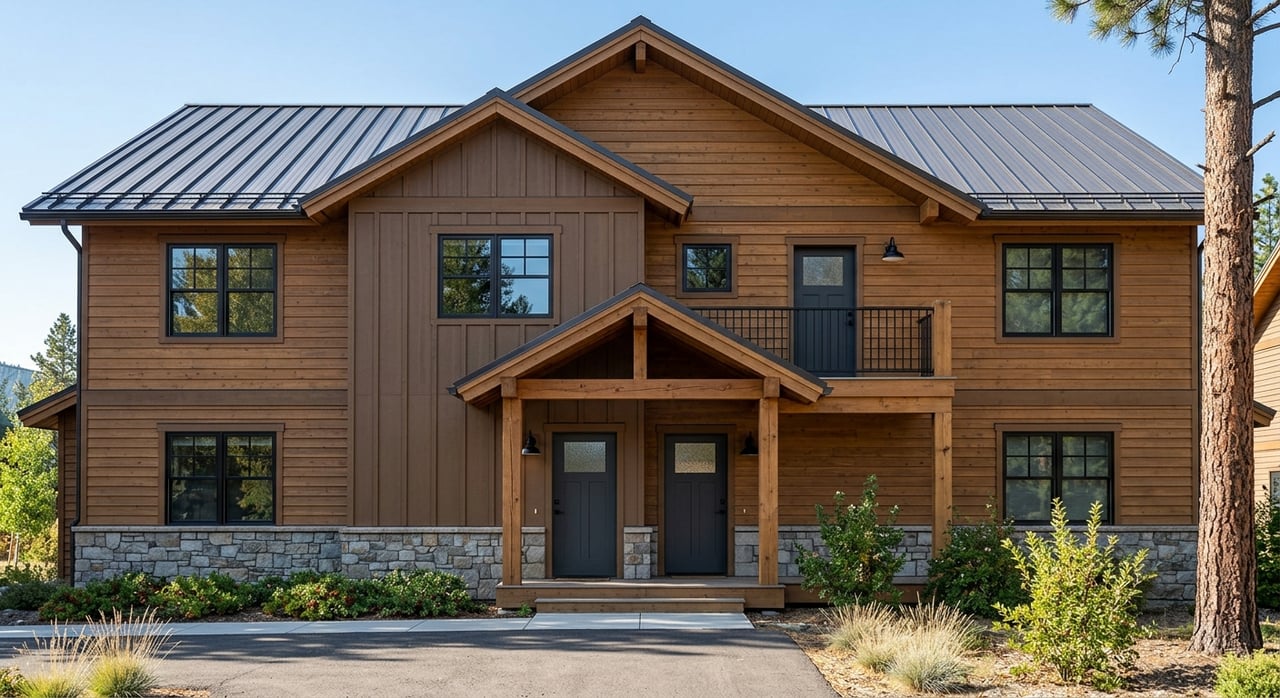
If you are looking for a small multifamily investment in the Black Hills, Lead can be tempting at first glance. You may find older duplexes and fourplexes, a historic setting, and rents that look promising on paper. But this is also a small, nuanced market where thin data, aging housing stock, and rehab costs can change a deal quickly. This guide will help you look at duplex and fourplex investing in Lead with a clearer, more practical lens. Let’s dive in.
Why Lead attracts small investors
Lead is a very small historic city, and that shapes the investment landscape in a big way. According to the City of Lead Comprehensive Plan, Lead had 2,982 residents and 1,451 households in 2022, with an average household size of 2.06.
For you as an investor, that usually means a limited number of available properties and fewer direct rental comps than you would see in a larger market. It also means each listing deserves more careful review because one property can sit in a very different position from the next based on access, parking, condition, and layout.
Lead’s housing stock is also old. The city reports that 69% of homes were built before 1940, and only 2.5% were built in 2000 or later. In practical terms, many duplexes and fourplexes in Lead are more likely to be older, rehab-heavy buildings than newer turnkey multifamily properties.
What the local housing picture tells you
A big-picture housing stat can be misleading if you do not look deeper. Lead’s overall housing vacancy was 18.8%, which sounds high at first.
But the same Comprehensive Plan, summarizing the Lead/Deadwood housing study, found 8 vacancies out of 195 market-rate rental units, or 4.1%. That falls within what the study described as a healthy 3% to 5% range.
That matters because overall vacancy may include seasonal or structural vacancy, not just units competing for long-term tenants. If you are underwriting a duplex or fourplex, you should focus on the rentable long-term market rather than assuming the citywide vacancy rate tells the whole story.
Demand may be stronger than it looks
Lead’s housing plans point to demand for more than one type of housing. The city’s planning documents note interest in single-family homes, but also in apartments, townhomes, condominiums, duplexes, and senior housing.
The Lead Comprehensive Plan also summarizes recommendations for additional housing, including:
- 46 to 54 market-rate rental units
- 52 to 56 moderate-rent or affordable workforce units
- 14 to 16 subsidized rental units
- 10 to 12 assisted-living units
- 22 to 26 senior independent or light-services units
This does not guarantee that every duplex or fourplex is a strong buy. It does suggest that smaller rental housing can fit a real local need, especially when the property offers practical layouts, manageable upkeep, and year-round livability.
Why older buildings need a sharper pencil
In Lead, your deal analysis should start with condition, not just rent. Historic buildings and older small multifamily properties can carry charm, but they can also come with higher costs tied to deferred maintenance, code updates, access challenges, and exterior work.
Lead’s planning documents say the historic downtown includes buildings dating to 1878. The city also notes that updates can be costly, parking is limited in some areas, and local geology and topography can increase construction costs. Those issues can affect both your renovation budget and your long-term operating costs.
That is why a duplex with “upside” is not always a bargain. If the building needs major systems work, exterior repairs, parking solutions, or layout changes, your returns can narrow quickly.
Rent comps in Lead are thin
One of the biggest mistakes small investors make in a market like Lead is relying too heavily on one portal average. The public rental sample is just too small for that.
Current listings on Apartments.com for Lead show 2-bedroom units around $1,050 to $1,250, a 3-bedroom, 3-bath unit at $1,700, and nearby listings that stretch higher depending on size and furnishing. Public market pages also vary. Trulia’s Deadwood rent trends show a different average and sample than other portals.
The clean takeaway is simple: underwrite from active local comps, not from a single website average. In a small market, a few listings can skew the picture fast.
What to verify before you trust rent projections
Before you move forward on a duplex or fourplex in Lead, it helps to confirm a few practical details:
- Unit mix and actual bedroom counts
- Current lease terms and rent roll
- Parking availability and winter access
- Utility setup and who pays what
- Condition of major systems and exterior components
- Whether the rents reflect true long-term occupancy or temporary furnished pricing
In a market with limited online data, local leasing knowledge often matters more than broad national portal estimates. That is especially true when properties differ widely by age, condition, and location within the Lead-Deadwood area.
Cap rate is useful, but only as a first screen
Cap rate can help you compare opportunities, but it is not a full investment story. According to Freddie Mac’s capitalization rate guidance, cap rate is a way to convert expected net operating income into present value, and even small changes in assumptions can materially affect value.
A simple example makes that clear. If a duplex brings in $30,000 in annual gross rent, loses $2,400 to vacancy, and has $9,600 in operating expenses, the NOI is $18,000. If the purchase price is $300,000, the going-in cap rate is 6.0%.
That sounds straightforward, but the math is sensitive. If your real rents come in lower than expected, or if an older building needs more maintenance than planned, your actual return can shift quickly.
A simple underwriting checklist
When you evaluate a duplex or fourplex in Lead, look beyond the list price and advertised rent. A stronger review usually includes:
- Realistic rent comps based on active and recent local listings
- Vacancy assumptions that reflect the long-term rental market, not just census-level vacancy
- Operating expenses that account for older housing stock
- Rehab budget for safety, systems, exterior, and code-related work
- Parking and access review, especially in steeper or tighter locations
- Exit strategy, whether you plan to hold for cash flow, improve and refinance, or sell later
This kind of checklist can help you avoid overpaying for “potential” that may be expensive to unlock.
Short-term rental rules matter
If you are hoping to blend long-term and short-term strategy, do not assume that flexibility is unlimited. The Lead Comprehensive Plan says Lead limits short-term rentals to 7.5% of residential units, and by December 2024 about 85 permits were using 76% of that allowance.
That does not mean a duplex or fourplex cannot be a good investment. It means you should verify permit status and local rules early, rather than treating short-term rental income as a fallback without confirmation.
Rehab incentives may help the numbers
Lead does offer a tax incentive for qualifying improvements that add more than $5,000 in assessed value. The city’s seven-year schedule phases from 25% in years 1 and 2 to 100% in year 7.
That kind of incentive can help if you are buying an older property that needs meaningful upgrades. It does not erase the upfront cost, but it can improve the long-term picture when you are budgeting carefully.
There are also preservation-oriented tools nearby in Deadwood. The City of Deadwood Historic Preservation programs include resources such as a paint grant program, a residential revolving loan fund for certain historic properties or buildings with structural or life-safety deficiencies, and a vacant home program for qualified residential properties that were vacant for two years before purchase.
Who duplexes and fourplexes may fit best
Lead is not a market where every investor strategy works equally well. Small multifamily here may be a better fit if you are comfortable with older properties, patient underwriting, and hands-on local due diligence.
You may be a good fit for this niche if you want:
- A small multifamily property instead of a larger apartment asset
- Long-term rental income in a tight, local market
- Value-add potential through renovation and better management
- A property type where local knowledge can create an edge
If you want brand-new construction, abundant comps, and highly standardized buildings, Lead may feel more challenging. But if you understand older housing and like markets where local insight matters, duplexes and fourplexes can deserve a closer look.
Why local guidance matters in Lead
In a micro-market like Lead, small details carry more weight. One block may have better access, parking, or building condition than another. One seller’s rent history may be realistic, while another’s projections may be aspirational.
That is where local brokerage guidance can help you move with more confidence. A team that understands the Lead-Deadwood market can help you pressure-test rents, compare location tradeoffs, review property history, and connect the dots between listing appeal and actual investment performance.
If you are thinking about investing in a duplex or fourplex in Lead, working with a local team can help you separate a workable opportunity from a property that only looks good online. To talk through current opportunities and local market context, connect with Real Properties of Lead Deadwood.
FAQs
What makes duplexes and fourplexes in Lead different from larger markets?
- Lead is a very small market with older housing stock, fewer rental comps, and more property-to-property variation, so local due diligence matters more.
What rent range should you expect for Lead investment property units?
- Current public listings in Lead show smaller units starting around $750+ and 2-bedroom units commonly around $1,050 to $1,250, but you should verify rents using active local comps instead of one portal average.
What does vacancy look like for Lead rental property investments?
- While overall housing vacancy in Lead was reported at 18.8%, the local housing study found market-rate rental vacancy at 4.1%, which suggests the long-term rental picture may be healthier than the citywide number implies.
What should you watch for when buying an older duplex in Lead?
- Pay close attention to deferred maintenance, major systems, parking, topography, access, and possible code or structural updates, since many properties in Lead were built before 1940.
Can you use a duplex or fourplex in Lead as a short-term rental investment?
- You should verify local permit rules first, because Lead limits short-term rentals to 7.5% of residential units and a large share of that allowance was already in use as of December 2024.
Are there rehab incentives for investment properties near Lead and Deadwood?
- Yes, Lead offers a qualifying property tax incentive for certain improvements, and Deadwood has preservation-related programs that may support eligible historic or previously vacant residential properties.