Which comes first when you buy raw land in the Black Hills: the excavator or the paperwork? Most buyers assume the answer doesn't matter much, that a closing is a closing and the building comes after on your own schedule. In Lawrence County, the order is not a formality. It is the thing that decides whether your lot becomes a house in one construction season or three, and whether the septic system underneath it costs you a modest trench or a five-figure engineered mound.
That distinction rarely shows up in a listing. A 2.57-acre parcel in Aventure Estates along Terry Peak Summit Road, sitting between Lead and Spearfish Canyon, reads like a picture: mountain views, privacy, a building site waiting for your plans. A 2.68-acre lot inside Elkhorn Ridge Golf Estates, where lots start around $68,000 on parcels ranging from a quarter acre up to ten, reads the same way: paved roads, city water, a golf course out the back windows. What neither listing tells you is that the ground itself, not the price per acre, is what determines your timeline and your budget from here.
The Lot Is Not the Whole Purchase
Lawrence County currently has more acreage listed for sale than any other county in South Dakota, which tells you something about how many buyers are working through exactly this process right now. Some of that inventory sits inside planned communities like Elkhorn Ridge Golf Estates, built on the historic Frawley Ranch with paved roads, community trails, and municipal water already in place. Some of it sits in subdivisions like Apple Springs, tucked into Boulder Canyon between Deadwood and Sturgis along Highway 14A, where the appeal is usable acreage and natural cover rather than golf course frontage. And a lot of it is raw, unplatted acreage bordering U.S. Forest Service land, sold on privacy and view lines with few covenants attached.
Every one of these properties looks like a finished product in the listing photos. None of them are. Before a single yard of concrete gets poured, Lawrence County requires two separate approvals, and they have to happen in a specific order.
The Sequence Lawrence County Actually Enforces
Here is the order the county's own building and septic offices lay out, and it is worth reading closely because skipping a step does not save time, it just means redoing the step later:
- Apply for a septic permit through the Lawrence County Planning and Zoning office. The application fee is $10.
- Hire a state-licensed professional engineer to evaluate the site and design the wastewater system. This includes a percolation test to see how the soil handles effluent.
- The engineer finalizes the system design based on that soil data.
- A state-licensed installer builds the system to the engineer's specifications, with the engineer inspecting the work.
- The engineer files a Post Installation Report with the county.
- Only after the septic permit and engineer design are in hand can the county issue a building permit for the house itself.
That last step is the one that surprises people. You cannot get a building permit first and sort out the septic system later. The county's own FAQ is direct about it: both the septic permit and the engineer's design have to be complete before a building permit will be issued at all. If you're picturing a summer of closing on land, breaking ground by fall, and moving in by next year, the septic sequence is the piece of that timeline you need to plan around first, not last.
Why the Ground Decides the Price, Not the Realtor
Here is where the price-per-acre number on a listing stops being useful on its own. What that soil test finds determines what kind of system you're allowed to build, and the two options are not close in cost or complexity.
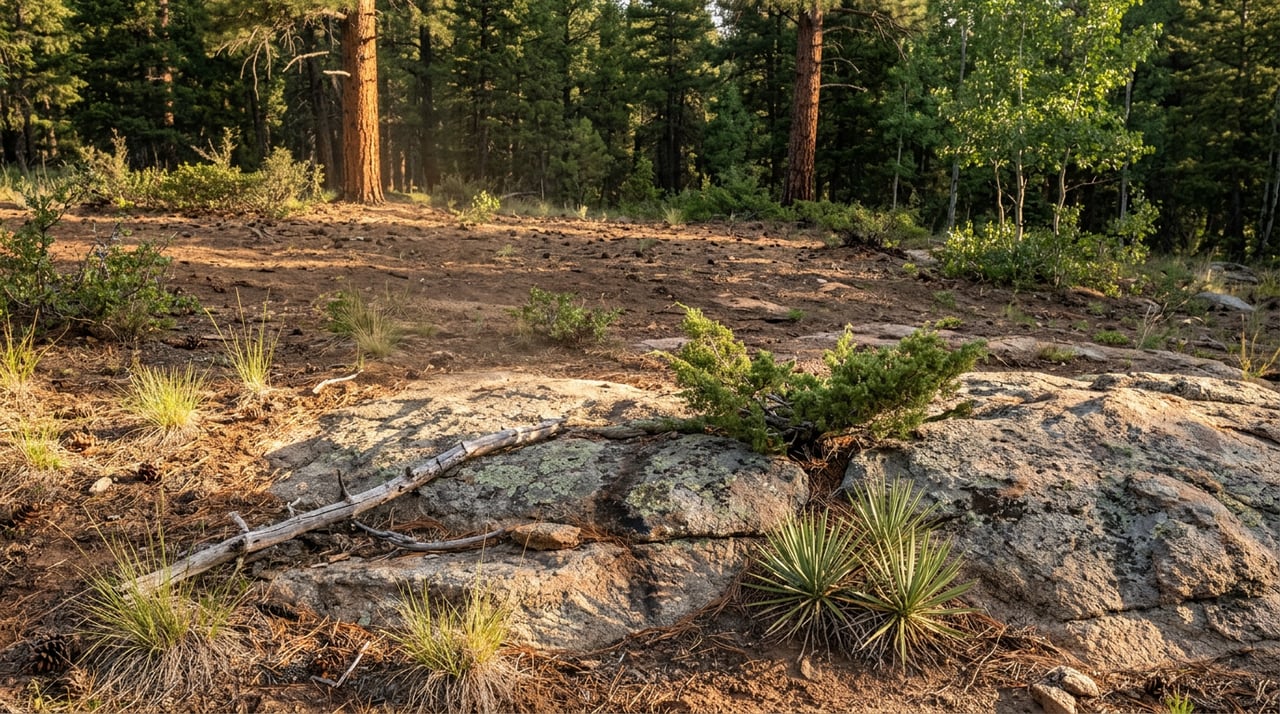
Much of the ground from Rapid City up through Lawrence County sits on granite and limestone bedrock close to the surface. Shallow soil over that kind of rock does not drain the way deeper soil does, and when a percolation test comes back showing limited depth, the standard trench-style septic system is often not an option. The engineer has to design a mound or at-grade system instead, which builds the drainfield up rather than down and typically means more engineering, more imported fill, and a longer installation process than a conventional trench.
Two lots with the same price tag and the same acreage can require entirely different systems depending on what the soil evaluation finds. A perc test and soil evaluation from a land surveyor in Lawrence County has run in the low hundreds to over $800 depending on the site, and that is before the engineer's design fee or the system itself. None of that shows up in a listing description. It shows up after you've made an offer, which is exactly why it belongs in your decision before you do.
If You're Hoping to Split the Land Later
A fair number of buyers look at a large, forested parcel bordering Forest Service land and think about dividing it down the road, maybe to sell off a piece or give a portion to family. Lawrence County's zoning has a hard floor on that. The county's Park Forest district, which covers a large share of the unincorporated county, sets residential density at roughly one unit per five acres. That means a ten-acre parcel can become two five-acre parcels, but you cannot subdivide a five-acre lot into anything smaller and still meet the density requirement. If subdividing later is part of your plan, the acreage on the listing needs to clear that ten-acre threshold now, not someday.
Buying Inside a Planned Community Changes the Road Question
Not every parcel in Lawrence County sits on a county-maintained road, and that detail matters more than it sounds like it should. Planned unit developments like Deer Mountain Village are built with private roads by design. The county's own development agreement for that community spells it out plainly: roads inside the PUD are private, built to county standards, and maintained under separate agreement rather than by the county highway department. If you buy into a community like that, you are buying into a private road maintenance obligation along with the lot, and it is worth asking exactly what that obligation looks like, who administers it, and what it costs annually, before you assume the county plow will ever touch your driveway.
What This Actually Means for Your Offer
None of this is a reason to avoid land in Lawrence County. It is a reason to ask different questions before you write an offer than the ones a listing photo answers for you. Has a percolation test already been done on this lot, and if so, what did it show? Is the parcel large enough to support the kind of septic system the soil requires, or large enough to subdivide later if that matters to you? Is the road private, and if so, what's the maintenance arrangement? A buyer who asks these questions before closing is working from the same information the county will require anyway. A buyer who asks them after closing is often redesigning a budget mid-project.
A Few Questions Worth Asking Before You Sign
Do I need a percolation test before I can even make an offer? No, but you'll need one before the county will approve a septic permit, and the result determines what kind of system you're allowed to build. Many buyers negotiate a site evaluation as part of their due diligence period so they know the answer before they're locked into a purchase.
Can I get a building permit while my septic system is still being designed? No. Lawrence County requires both the septic permit and the completed engineer design before it will issue a building permit for the structure itself.
Does this apply to every parcel, including ones inside subdivisions with existing utilities? Communities with municipal water and sewer, such as parcels that fall under city jurisdiction in Spearfish, follow different rules than raw county acreage. If you're unsure which category a specific lot falls into, that's worth confirming before you assume either standard applies.
Land in Lawrence County rewards buyers who understand the sequence as well as they understand the view. If you're looking at a parcel here, whether it's a golf course lot, a canyon subdivision, or acreage backing up to national forest, Real Properties of Lead Deadwood can walk you through what a specific property will actually require before you build on it. Speak with a Deadwood Neighborhood Expert and request a free home valuation to start with the facts on the ground, not just the ones in the photos.