A quarter-acre lot in the Apple Springs subdivision, tucked into Boulder Canyon along the road between Sturgis and Deadwood, is listed this month at $122,500 for 0.26 acres. Work the math and that comes out to roughly $470,000 an acre.
A few miles away, in the same county, a 129-acre property called Two Creeks Ranch sold on February 23, 2026 for $2,490,000. That works out to about $19,300 an acre. Both properties sit inside Lawrence County. Both were priced by people who know the local market. And the per-acre figure they produce differs by a factor of roughly 24.
That gap isn't a typo or a fluke listing. It's the reason four different land-data sites can publish four different "average price per acre" numbers for the same county in the same season, and why none of them is wrong.
The number that keeps changing depending on who you ask
Pull up Lawrence County land data from a handful of sources this month and you'll get answers that don't sit anywhere near each other. One major land portal puts the median price per acre at $25,226. A different aggregator, pulling from a smaller and differently weighted pool of listings, puts the average at $62,075 per acre. A parcel-records site tracking actual closed sales, working from a much thinner sample of just eight recorded transactions, puts the median sold price at $4,600 per acre.
That's a thirteen-fold spread between the low and high figures, all describing land inside the same county boundary, all current as of this month. If you're comparing listings and trying to figure out whether a price per acre is a good deal, none of these headline numbers tells you much on its own. What they're actually doing is averaging together two products that have almost nothing in common except that both happen to be measured in acres.
Two products, one label
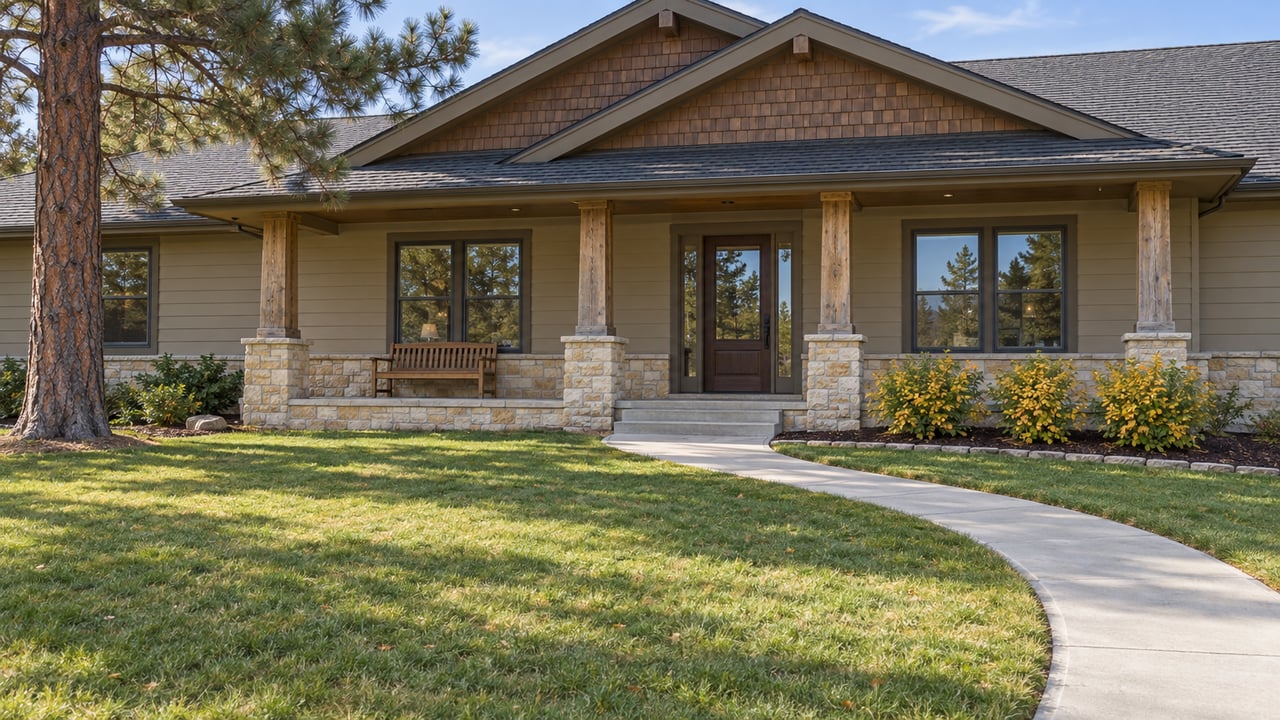
The first product is the platted subdivision lot. Places like Apple Springs, Powder House Pass, Paradise Acres IV, Canyon Gate Village, Cedar Berry Canyon Estates, and Aventure Estates along Terry Peak Summit Road all sell parcels that run from a fraction of an acre up to two or three acres, usually with paved road access already built, utilities either stubbed to the property line or provided directly by the subdivision's water and sewer association, and in several cases frontage on a golf course. Apple Springs borders the Boulder Canyon Golf Club. Canyon Gate Village borders Spearfish Canyon Golf Course. A recent Apple Springs listing just under an acre notes water and sewer provided by the association and underground utilities already in place. These lots are priced the way house lots are priced almost anywhere: by location, view, and proximity to finished infrastructure, not by raw acreage.
The second product is bulk acreage sold for its land value, not its lot value. A 231.68-acre property south of Deadwood and Lead is marketed on the open acreage that gives a future owner the choice between privacy and development potential. Corral Creek Ranch, out in Nemo, is described as sitting in a semi-private area encompassed by Forest Service land. The Cutting Mine Deadwood Creek property offers forested acreage with aspen draws along Cutting Mine Road. A 197-plus acre parcel off Crook City Road borders U.S. Forest Service land to the south. Two Creeks Ranch, the 129-acre sale mentioned above, is flanked by North Rapid Creek and Buskala Creek and bordered by the Mickelson Trail and North Rochford Road. None of these prices were built around a per-acre rate for building sites. They were built around what the whole parcel is worth as timber, grazing, hunting ground, or a legacy holding, with the price per acre falling wherever the total lands once you divide it out.
Why blending them breaks the average
Average a $470,000-an-acre subdivision lot with a $19,300-an-acre ranch and the number you get describes neither one. It's the land equivalent of averaging the price per square foot of a downtown condo with a wheat field and reporting a single figure for "regional real estate."
That's exactly what's happening across these data sources, just with different mixes. A site whose Lawrence County inventory happens to be heavy on Apple Springs and Powder House Pass listings will report a high per-acre average, because those small, fully-improved lots carry a high price for their size. A site whose sold-records sample happens to be thin and weighted toward larger working parcels will report a low median, because a handful of hundred-acre-plus sales pull the number down fast. Neither site is measuring the market incorrectly. They're measuring different corners of it, and reporting the result as if it were one market.
This also explains why the county's number looks so different from statewide farmland tracking. The SDSU Extension's annual Farm Real Estate Survey, now in its 36th year, tracks agricultural land values and cash rental rates specifically for cropland and pasture across South Dakota's regions. That's a legitimate benchmark for production ground, but it isn't measuring the same asset as a golf-course view lot in Boulder Canyon or a 120-acre timber parcel bordering the national forest. Lawrence County's land market is a blend of recreational, residential, and working-land pricing that a purely agricultural index was never built to capture.
What the infrastructure gap actually costs
The bigger practical issue for a buyer isn't the average, it's what's baked into a given price and what isn't. A local Black Hills builder's 2026 cost breakdown for custom home construction notes that land cost per acre across the region typically ranges from $25,000 to $150,000 or more, depending on location, views, road access, and utility availability, with premium wooded lots near Lead, Spearfish Canyon, and Deer Mountain Village sitting at the top of that range. A subdivision lot at the high end of that range has usually already absorbed the cost of grading a road and running power and water to the property line. A raw acreage parcel at the low end of the range hasn't. The $19,300-an-acre ranch parcel can end up costing as much per usable building site as the $470,000-an-acre subdivision lot once you've drilled a well, installed a septic system, and extended a power line back to the nearest transformer.
That's the question worth asking before comparing any two Lawrence County listings on a per-acre basis. Is the price already covering finished infrastructure, or is it covering raw land where the infrastructure cost still has to be added on top? A few checks help sort that out quickly:
- Whether water, sewer, and power are already at the property line or provided by an association, as in several Apple Springs and Powder House Pass listings, versus a raw parcel where none of that exists yet.
- Whether access comes via a deeded easement, a public road frontage, or an unrecorded private road, since a private road maintenance agreement changes both cost and legal footing.
- Whether the property carries subdivision covenants that govern building size and use, versus a bulk acreage listing advertised specifically as having no covenants and no neighbors.
- Whether the acreage figure includes usable building ground or largely steep, forested, or floodplain terrain that limits where a structure can actually go.
Reading a listing on its own terms
None of this means one type of Lawrence County property is a better buy than the other. A buyer looking for a finished, low-maintenance building site with a golf course view is shopping a genuinely different product than a buyer looking for 150 acres of timber and creek frontage to hold for the next generation. The mistake is comparing their price tags on a single per-acre basis as if they were competing for the same dollar. Once you know which tier a listing sits in, subdivision lot or bulk acreage, the price starts to make sense on its own terms, and the county-wide average stops being useful information one way or the other.
If you're weighing a specific parcel in Lawrence County and want a read on what its price is actually telling you, Real Properties of Lead Deadwood walks buyers through that comparison property by property, including the access, utility, and covenant details that don't show up in a per-acre headline.
This article is general information, not legal, tax or financial advice. Consult a qualified professional about your situation.